
Many Vietnamese families still accept cognitive decline in the elderly as an inevitable part of life. However, from a medical perspective, this is a dangerous misconception. It is time to draw a clear line between “normal aging” and “Alzheimer’s Disease.”
1. The Core Difference: Aging or Disease?
Many people mistakenly believe that Alzheimer’s is simply a more severe stage of forgetfulness. In reality, the nature of these two states is completely different:
- Biological Aging: This is a natural process where neurons work more slowly. It’s like an old computer—processing information takes longer, but the data is still there. You might forget where you put your keys, but you still know what a key is for.
- Alzheimer’s Disease: This is a neurodegenerative disease. Brain cell destruction occurs due to the abnormal accumulation of protein plaques (Amyloid-beta) and tangles (Tau). They disrupt communication between neurons, leading to permanent cell death. At this stage, “data” in the brain is being permanently erased.
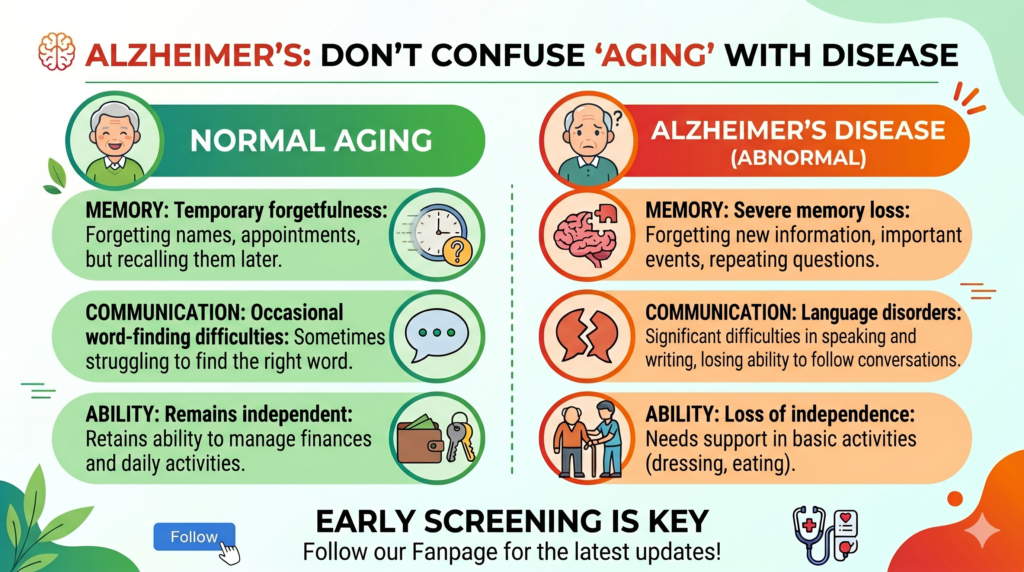
2. Comparison Table: Spotting the Signs
To help you identify early signs, observe the differences in these common daily situations:
| Situation | Normal Aging (Natural) | Alzheimer’s Disease (Abnormal) |
| Memory | Forgetting an appointment but recalling it later. | Forgetting recently learned information; constantly repeating the same question. |
| Task Performance | Occasionally needing help with new electronic devices. | Difficulty performing familiar daily tasks (e.g., struggling with a recipe used for decades). |
| Orientation | Confusing the day of the week but realizing it later. | Getting lost in a neighborhood they’ve lived in for years; not knowing how they got there. |
| Language | Sometimes pausing to find the right word during a conversation. | Using the wrong names for objects (e.g., calling a “pen” a “writing stick”); losing track of conversations. |
| Judgment | Making a poor decision in a specific moment. | Significant personality shifts: from gentle to irritable, suspicious, or becoming easily scammed financially. |
3. Why “Early Screening” is the Golden Window?
While there is currently no absolute cure for Alzheimer’s, early detection through modern screening methods (such as biomarker testing and neuroimaging) is crucial:
- Improving Quality of Life: Early intervention helps patients maintain independence longer and preserve precious social connections and memories.
- Slowing Neurodegeneration: Medication and cognitive training are most effective when brain damage is not yet profound.
- Future Preparation: It gives families time to plan for finances, long-term care, and psychological adjustment, avoiding the trauma of sudden decline.
4. Conclusion
Alzheimer’s is not a silent resignation to age. It is a battle that requires understanding, patience, and scientific support. Instead of waiting for obvious symptoms, be proactive with regular screenings for your loved ones today.
Keep the memories alive longer with those you love.