In the history of neurology, assessing the extent of brain cell damage often required invasive or costly procedures. However, the emergence of NfL (Neurofilament light chain) is creating a revolution. Regarded as one of the most promising biomarkers in modern neuroscience, NfL acts as a “check engine light,” allowing us to monitor neurological health through a simple blood test.
1. What is NfL? The Mechanism of Protein Leakage
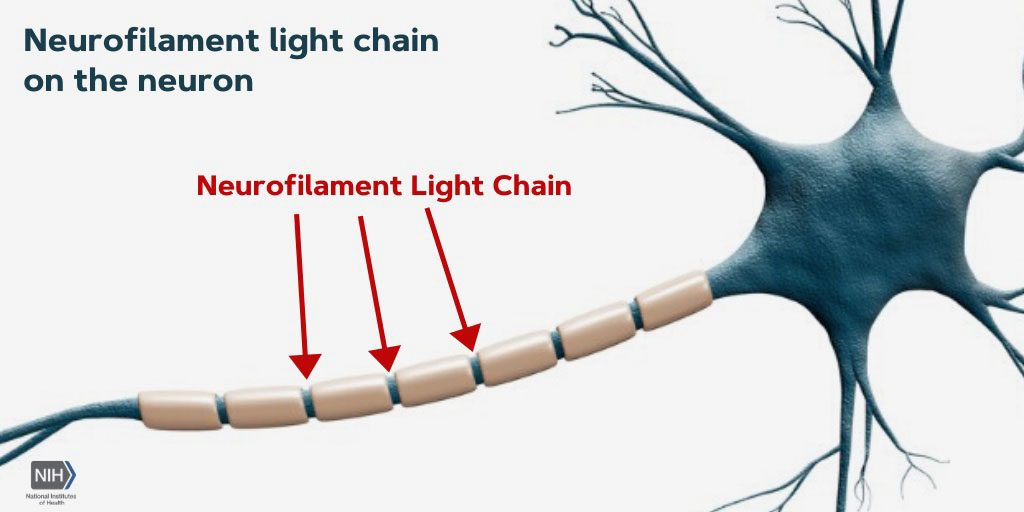
To understand NfL, one must understand the structure of a neuron. Each neuron possesses an internal “cytoskeleton” to maintain its shape and stability, with Neurofilament light chain (NfL) being a core component.
- In a healthy brain: NfL remains contained within the axons to perform its structural function.
- Upon injury: Any impact that damages or destroys neurons (due to inflammation, degeneration, or trauma) breaks this cytoskeleton. NfL protein then leaks into the extracellular space, enters the cerebrospinal fluid, and eventually diffuses into the bloodstream.
Scientific Principle: The concentration of NfL in the blood is directly proportional to the extent of neurodegeneration occurring. The higher the level, the more intense the brain damage.
2. The Breakthrough Advantages of NfL in Clinical Diagnosis
Previously, clinicians relied on MRI scans or lumbar punctures to assess brain damage. NfL offers transformative benefits:
- High Accessibility: Requires only a standard blood test, minimizing invasive risks and reducing costs for patients.
- Early Predictive Value: NfL levels can rise years before clinical symptoms like memory loss or tremors become apparent. This enables intervention during the “golden window.”
- Monitoring Treatment Efficacy: NfL is a dynamic tool. A decrease in NfL levels following a treatment regimen provides scientific evidence that brain damage is being mitigated.
3. A Synergistic Role in Alzheimer’s Management
NfL does not replace specific tests but serves as the “perfect piece of the puzzle” in the diagnostic toolkit at DOIT Scientific:
- NfL (Measuring Damage Rate): Reflects the intensity of neuronal death at the time of testing.
- Amyloid-beta & Tau (Identifying the Cause): Confirms whether the damage is specifically due to Alzheimer’s pathology.
This combination allows experts to provide a comprehensive view: Does the patient have Alzheimer’s, and how fast is the disease progressing?
Conclusion: Proactively Protecting the Brain with Scientific Evidence
At DOIT Scientific, we believe that monitoring biomarkers like NfL is a vital step in shifting from “treating disease” to “proactive health management.” Do not wait until brain functions are visibly impaired. Listen to the “signals” from your blood to protect the cognitive future of yourself and your loved ones.