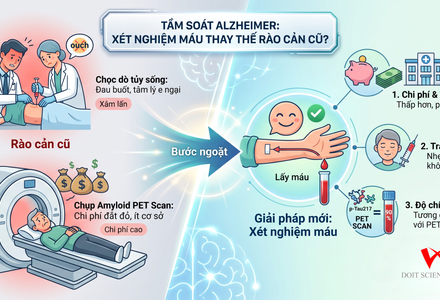
Most people believe that medical consultation for Alzheimer’s is only necessary when symptoms like forgetfulness or confusion appear. However, the truth is that by the time these symptoms manifest, the brain has already undergone decades of damage.
1. The Preclinical Stage: The “Silent Destroyer”
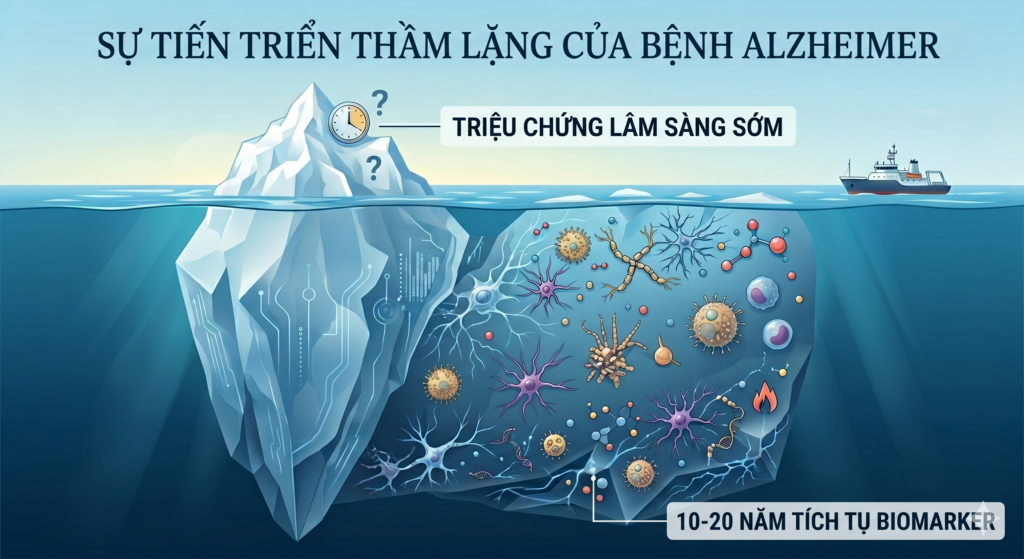
In medicine, the preclinical stage of Alzheimer’s is when pathological changes have begun to form in the brain, yet the individual remains completely lucid, with intact memory and normal daily functions.
Scientific research shows that toxic protein plaques (Amyloid-beta) and neurofibrillary tangles (Tau) start accumulating and destroying brain cells 10 to 20 years before the first signs of memory loss surface. Waiting for symptoms to appear before intervening is often compared to trying to extinguish a fire after it has already consumed most of the house.
2. “Biomarkers” – The Golden Key to Prediction
How can we know the brain is in danger when a person still feels healthy? The answer lies in Biomarkers.
Biomarkers are measurable indicators in the body that accurately reflect the biological changes occurring in the brain. Thanks to advancements in biomedical technology, we can now detect Alzheimer’s through:
- Blood or Cerebrospinal Fluid Tests: Identifying the presence of p-Tau217, Amyloid-beta 42/40, etc.
- Neuroimaging (PET scans): Directly observing the accumulation of plaques within the brain.
Biomarkers act as an “early warning system,” identifying the risk of Alzheimer’s even when your memory is at its peak.
3. The Vital Benefits of Early Detection
Detecting Alzheimer’s during the preclinical stage isn’t just about knowing the future; it’s about changing it:
- Seizing the “Golden Window”: This is when brain cells have not yet suffered widespread damage. Medical and lifestyle interventions are most effective at this point to stop the disease from progressing.
- Delaying Onset: Modern medicine aims to prolong the period of human lucidity. Early detection gives us the chance to push the onset of dementia back by many years, or even decades.
- Proactive Lifestyle Changes: Knowing the risk provides powerful motivation to adjust nutrition, engage in cognitive training, and manage underlying conditions (like hypertension or diabetes) that exacerbate Alzheimer’s.
4. Conclusion
Do not let subjective assumptions and the “wait-and-see” mentality rob you of the chance to protect your and your loved ones’ memories. Understanding the preclinical stage and the importance of biomarkers is the first step in the journey of proactive brain health protection.